
"coffee introduction 19th century"
400 article(s) found

San Pedro Estate Single Bean Flavor Description Variety Growing History Introduction to Production
Weixin Official Accounts cafe_style ) Puerto Rico-San Pedro Manor The history of Caribbean coffee has a lot to do with the Spanish name transfer. In the 18th century, coffee was not so important everywhere. The main job was to grow sugar crops on fertile valley land. In the early 19th century (1800),

Flavor description of Burundian Coffee introduction to the manor of the region where the varieties are produced
Flavor description of Burundian Coffee Variety of Burundian Coffee production area treatment Manor introduces Burundi, formerly known as Urundi, which formed a feudal kingdom in the 16th century. Since the middle of the 19th century, the forces of Britain, Germany and Belgium invaded. The long-ruled monarchy, which was conquered by Germany in 1890, listed it as the territory of German East Africa and fell under the control of the Belgian army in 1916.

Stories about the Origin of Java Coffee introduction to Java Coffee varieties
Professional coffee knowledge exchange more coffee bean information please pay attention to the coffee workshop (Wechat official account cafe_style) Java has a long history of cultivation. As its name suggests, the variety was introduced directly from Ethiopia to Java by the Dutch in the early 19th century. It was initially considered to be a typical choice. In the middle of the 20th century, a local farmer passed through Vilmorin

Introduction of Panamanian Coffee Market Analysis, texture characteristics, Grinding Calibration method
The earliest coffee tree in Panamanian history was introduced by a British captain who married a Panamanian girl in the 19th century (Rosa coffee was introduced to Panama in the mid-20th century). They first grew coffee in coastal areas, and later the colonists introduced coffee to the mountains of the western highlands where coffee is more suitable for growth.

Introduction to Cuban Crystal Coffee Plantation
The earliest archaeological landscape of coffee plantations in southeastern Cuba, located in the Maestra Mountains in southeastern Cuba, was a coffee-growing area in southeastern Cuba in the 19th and early 20th centuries. Mount Maestra averages 1500 meters above sea level, straddling Guantanamo and San Diego
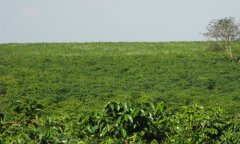
Kenyan coffee has a wonderful fruit flavor.
Coffee location: Kenya Coffee Garden: the aroma of fruit from African times entered Kenya in the 19th century, when Ethiopian coffee drinks were imported to Kenya through Southern Yemen. But it was not until the early 20 th century that the Bourbon Coffee Tree was saint. The Austin Mission (St.AustinMission) was introduced. Kenyan coffee is mostly grown at 15002100 meters above sea level and harvested in the middle of the year.

The Evolution of Italian enrichment espresso Machine
From the first discovery of coffee in the 6th century AD to its introduction into Europe in the 16th century, to the global expansion of the coffee chain represented by Starbucks in the 1970s, the advent of espresso machines is a very important page in this long 1500-year history. In the 19th century, when European powers such as Britain, France and the West Netherlands carved up the territory of coffee production and cultivation, Italy did not grab one.

Introduction to the quality and taste of jasmine-flavored Guatemalan coffee flavor description
Coffee-flavored coffee was really introduced into Guatemala in 1750 by Father Jesuit, and the coffee industry was developed by German colonists at the end of the 19th century. Today, most of the coffee industry's production takes place in the south of the country. There are seven major coffee producing areas in Guatemala, and the flavor of coffee produced in each region is different, but to sum up, Guatemala

Introduction of Crystal Coffee Manor in southeastern Cuba
The earliest archaeological landscape of coffee plantations in southeastern Cuba, located in the Maestra Mountains in southeastern Cuba, was a coffee-growing area in southeastern Cuba in the 19th and early 20th centuries. Mount Maestra averages 1500 meters above sea level, straddling Guantanamo and San Diego

A brief introduction to the description of flavor, taste and aroma characteristics of Java coffee
Java coffee is full-bodied and full-bodied, with clear, high-quality acidity, high balance, and sometimes nutty taste. In terms of appearance and quality, Java coffee is excellent, just like a woman's vaguely charming, charming and just right, memorable. Java has a mild climate, humid air and diverse climate that makes it a harvest season all year round.

Introduction of the Origin of the most traditional Arabica Coffee
Arabica (Coffea arabica) is the most traditional Arabica coffee variety. Originally from East Africa, coffee was monopolized by the Arab world for a long time before the 15th century, so it was called Arabian coffee by Europeans. It turned out that all the commercial coffee in the world were small grains, but it was only at the end of the 19th century that growers began to look for other resistance to a large-scale disease.

Introduction to the main producing areas of Salvadoran Coffee Bean
In the 19th century, coffee in El Salvador was an important cash crop, and the government legislated to collect taxes and encourage planting and export. although coffee farmers in El Salvador could not get technical or financial assistance, they were in the growth of production per hectare, it is quite excellent among many coffee-producing countries! The output value of coffee is like a locomotive, which is important to the basic transportation construction and the development of light industry in Saudi Arabia.

Kenya coffee with fruit flavor, rich taste and perfect introduction to boutique coffee
Aromatic, rich, fruity, rich and perfect on the palate. Kenya coffee has a wonderful fruity flavor, with a blackberry and grapefruit flavor, is a favorite of many coffee lovers. This coffee has an excellent medium purity, crisp and refreshing taste. Fresh flavor and best for iced coffee in summer. When you taste this coffee,

Kenya Coffee Kenya Coffee is a unique and wonderful coffee with fruit flavor
Kenyan coffee plantations: the fruity aroma of african times entered kenya in the 19th century, when ethiopian coffee drinks were imported to kenya via southern yemen. But it wasn't until the early 20th century that bourbon coffee trees were grown by St. Austin Mission introduced. Kenya coffee is mostly grown at an altitude of 1500 to 2100 meters and harvested twice a year. to ensure that only

Introduction of Kenyan coffee beans
Kenya is bordered to the north by Ethiopia, the origin of Arabica coffee trees, but it was not until the beginning of the 20th century that coffee cultivation began. In the 19th century, missionaries introduced Arabica trees from the leaves, but did not plant them in large quantities. It was not until 1893 that coffee was cultivated on a large scale because of the introduction of Brazil's ancient bourbon seeds. That is to say, Kenyan coffee is of Brazilian origin, because of water.

Kenyan boutique coffee flavor introduction Kenyan coffee taste characteristics Kenyan coffee roasting
In 1878, the British landed coffee in Africa and set up a coffee plantation in Kenya in the 19th century, when Ethiopian coffee drinks were imported to Kenya through southern Yemen. But it was not until the early 20 th century that the Bourbon Coffee Tree was saint. The Austin Mission (St.AustinMission) was introduced. Origin of coffee in Kenya: most coffee in Kenya (Kenya) grows at 1500 above sea level

Introduction to the varieties of Arabica Coffee produced by the method of Manor treatment
The Grinding scale of Arabica Coffee Variety introduction of Arabica Coffee beans is synonymous with Arabica. Arabica Enterprise claim Open Classification: coffee plant biology Natural Rubiaceae Arabica, (scientific name Coffea arabica, English Coffee Arabica), can also be called Arabica coffee, is Ethiopia (Ethiopia)

A brief introduction to the historical development of coffee in Taiwan to understand the reasons for coffee in Taiwan
In the 18th century, 1884 (10 years of Guang Xu), the British were introduced to trial planting in the three Gorges of Taipei. during the Japanese occupation era, the Japanese saw that Taiwan's climate and soil were suitable for coffee, so they introduced "Arabica" from abroad and successfully planted it in the north. They invested heavily in Zhiben and Mizuho, and the yield was good. In the 19th century, Taiwan had rich coffee output and good quality and flavor, which led to the complete victory period of coffee in Taiwan.

A brief introduction to the story of New Guinea coffee beans and Papua New Guinea coffee
Professional coffee knowledge exchange more coffee bean information please follow the coffee workshop (Wechat official account cafe_style) front street-Papua New Guinea Coffee introduction New Guinea was colonized by the Netherlands, Germany, Britain, Japan, Australia and other countries from the 18th century to the 19th century, the western half of the islands became Indonesia in 1961, and the eastern half of the islands separated from Australia in 1975

Flavor description and brewing method of Kenyan coffee producing area introduction of high-quality coffee beans
The Kenyan coffee bean flavor description method was introduced to Kenya in the 19th century, when Ethiopian coffee drinks were imported to Kenya through South Yemen. But it was not until the early 20th century that the bourbon was introduced by the St. Austen Mission (St.AustinMission). Kenyan coffee is mostly grown at an altitude of 1500m, 2100m, and is harvested twice a year. To ensure that only